Solace
A research-driven mobile wellness experience designed to help young adults understand emotional patterns, reflect consistently, and access practical support.
Open live prototypeOverview
As part of my Consumer Health Informatics class, my team developed Solace to help young adults understand how anxiety, sleep habits, and stress-management practices shape their daily mental wellness. The mobile experience combines mood and sleep tracking, guided reflection, personalized insights, community support, and coping activities.
Interviews with college students and recent graduates surfaced academic pressure, uncertainty, stigma, inconsistent sleep, and a need for personalized reflection. These findings shaped a private, low-friction experience with anonymous participation, clear visualizations, accessible touch targets, and predictable navigation.
What I did
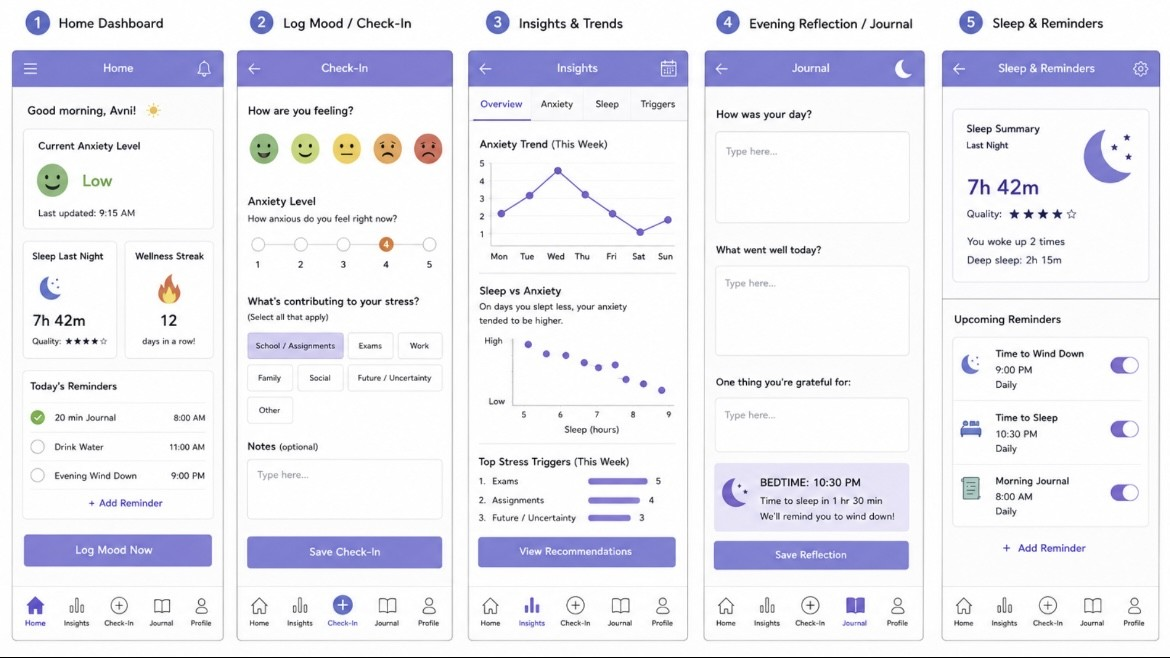
I took a leading role in translating the research into the product’s interaction architecture and visual direction. I synthesized user needs into feature requirements, created the initial multi-screen prototype, and drove the interface from early wireframes through the final mobile-first experience in Figma. My work established the core navigation, screen hierarchy, daily check-in flow, reflection experience, and visual system used across the prototype.
Product design
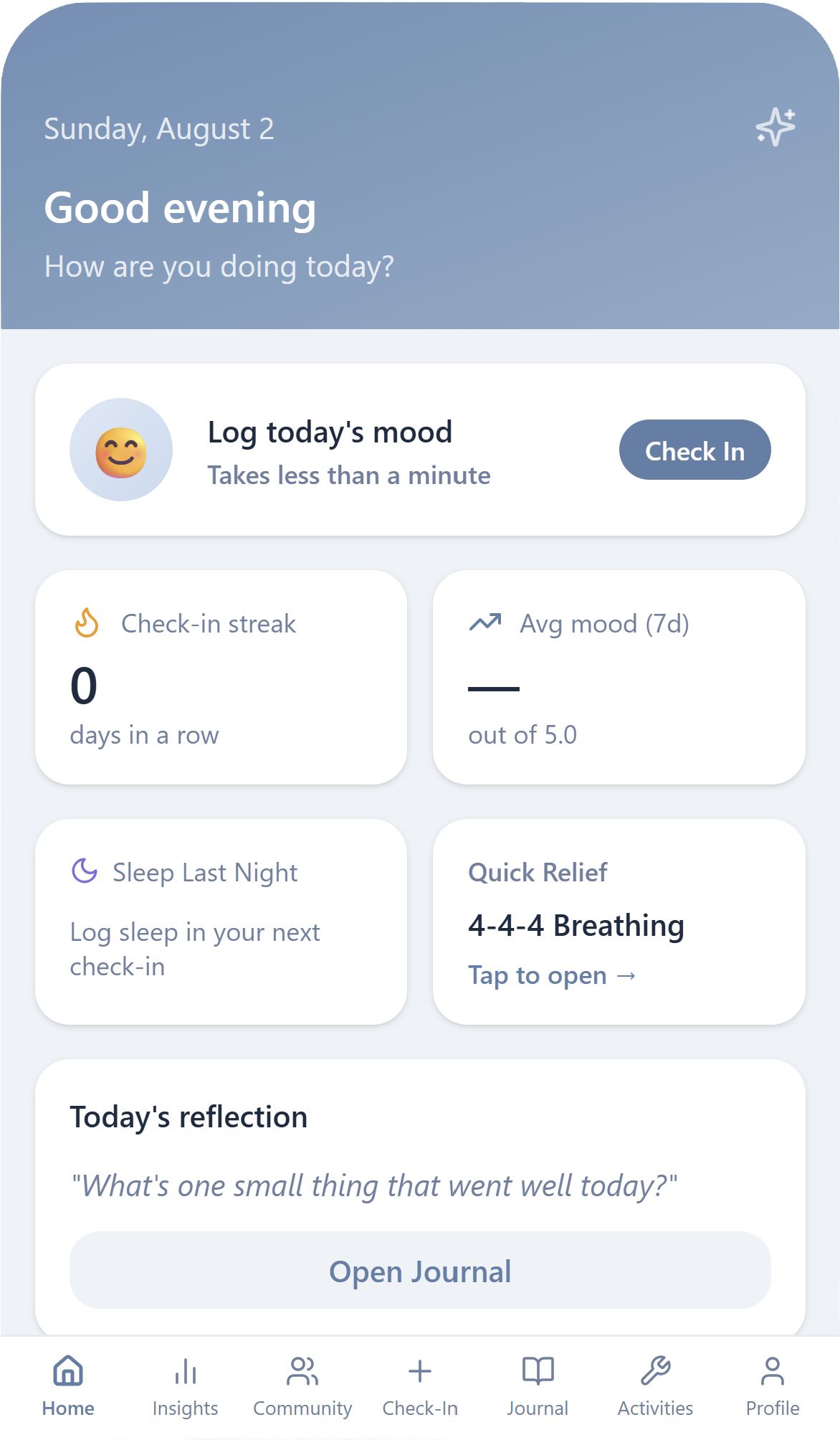
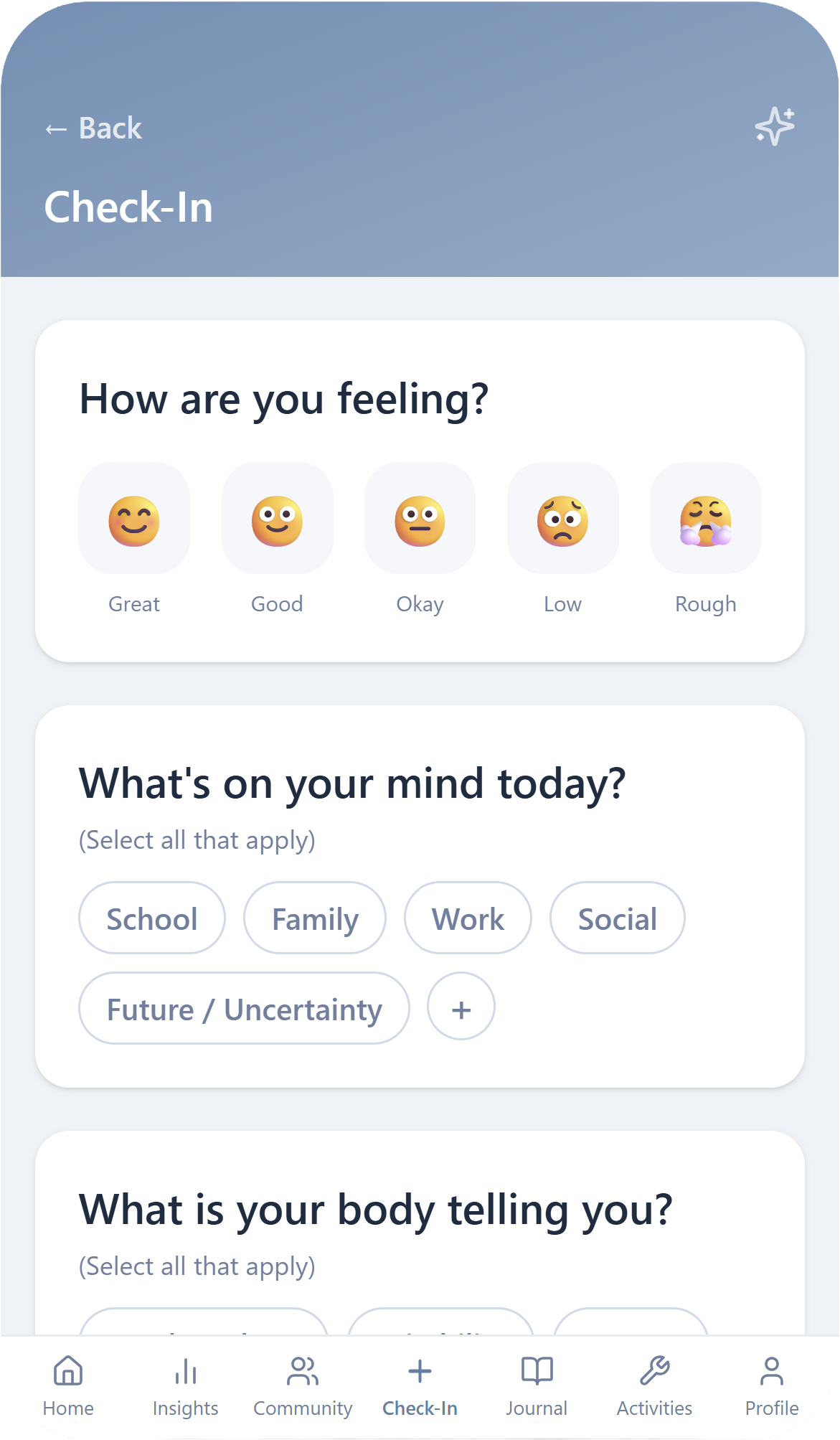
I designed the primary user flows and a substantial portion of the final interface, focusing on quick daily engagement without overwhelming the user. The home dashboard surfaces mood, sleep, streaks, and reflection prompts at a glance, while the check-in flow captures emotional state, current concerns, physical signals, notes, and sleep quality.
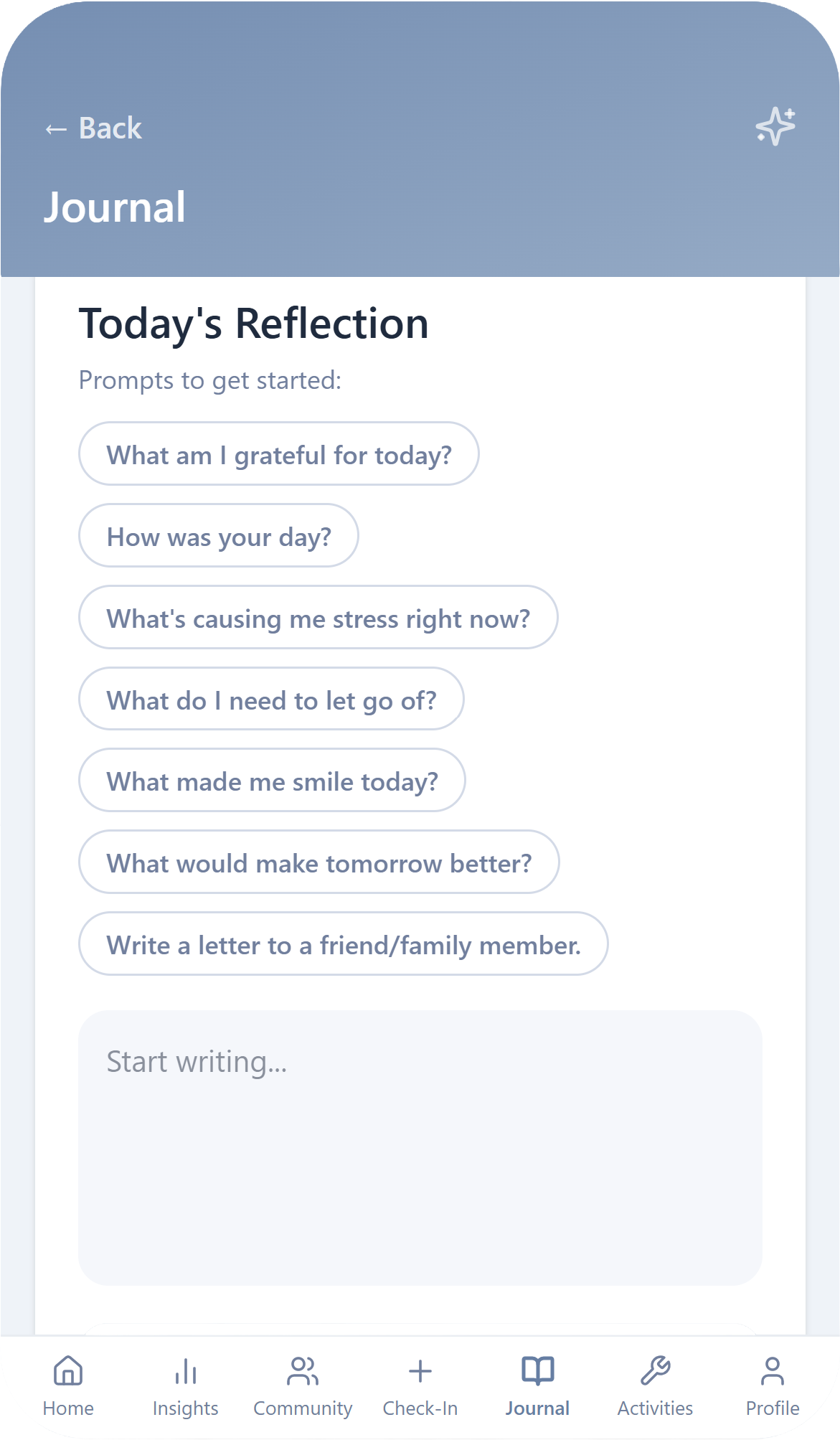
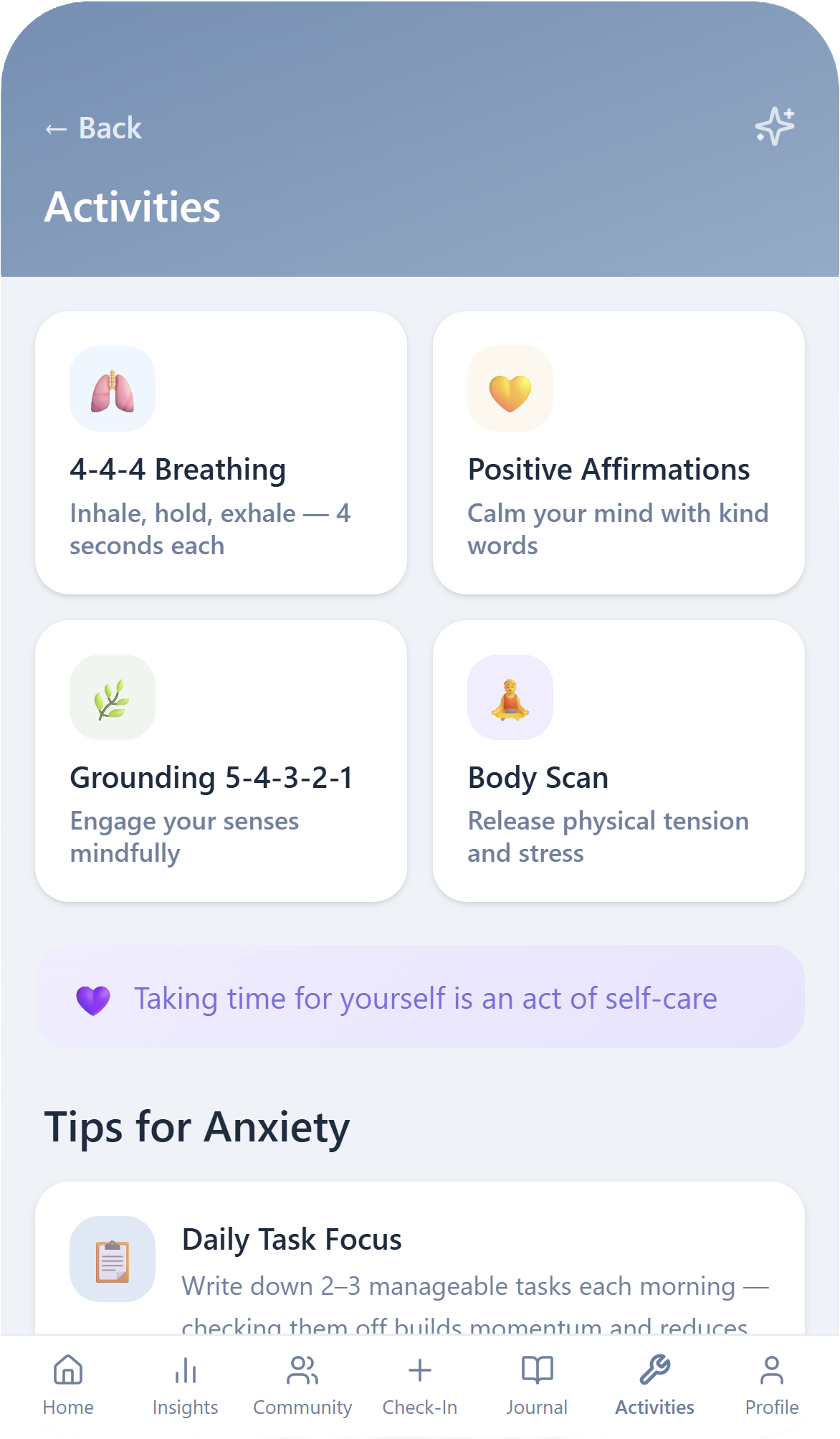
I also developed the journal and activities experiences, including guided reflection prompts and structured breathing, grounding, affirmation, and body-scan exercises. Across the product, I applied a consistent hierarchy, calming visual language, predictable navigation, and accessible mobile interaction patterns.
Design evolution
I created an early multi-screen prototype to establish the product’s information architecture and test the relationship between check-ins, insights, journaling, and sleep support. As our team gathered feedback, I refined the navigation, simplified dense screens, increased touch-target sizes, strengthened visual hierarchy, and expanded the experience to include community and guided wellness activities.